
2028 Presidential Shadow Primary Now Operates Like Deli Counter
Candidates Form Lines, Take Numbers in Modern Electoral Tradition
"Number two on the ticket doesn't necessarily translate to second in polling. It's just an efficient way to manage candidate appearances."
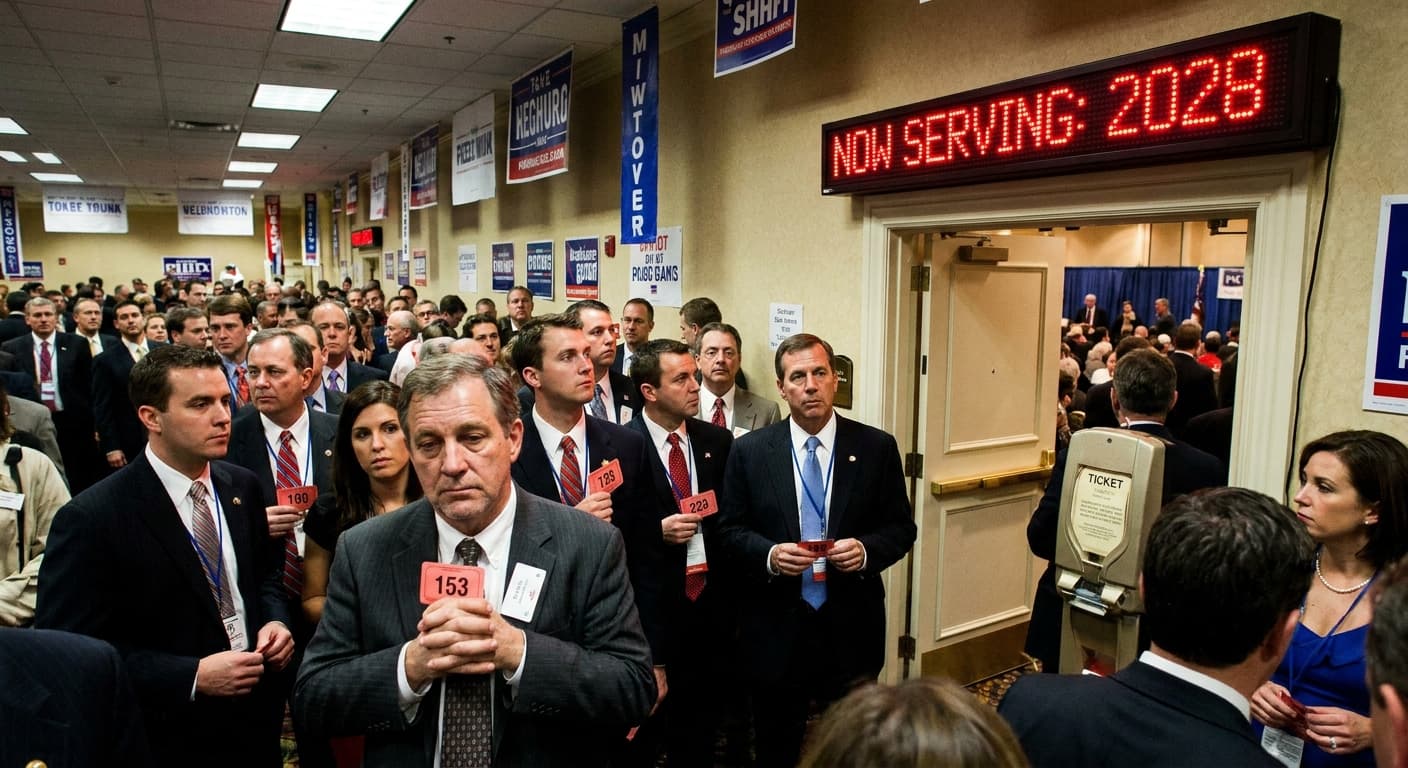
In a groundbreaking shift toward culinary-inspired politics, the 2028 presidential shadow primary has embraced the technological efficiencies of a deli counter system. This novel approach, featuring a bright red "NOW SERVING" display, was unveiled at the party's midterm convention ballroom last weekend. Consequentially, hopeful candidates are now required to pull a paper ticket to join the ranks of potential nominees.
The Federal Election Commission (FEC) has swiftly adapted to this innovative system, now considering the act of ticket-pulling as a formal filing for candidacy. According to insiders, regulatory adjustments are underway to classify each ticket as an in-kind contribution, with a symbolic value attached based on the perceived political weight of the ticket number.
Experts predict that ticket numbers could soon play a decisive role in campaign momentum, with low numbers potentially signaling early frontrunners—though political analysts caution against reading too much into single-digit numbers. "It's important to remember," stated one analyst, "number two on the ticket doesn't necessarily translate to second in polling. It's just an efficient way to manage candidate appearances."
The Commodity Futures Trading Commission (CFTC) has been drawn into the fray as a secondary market for these political tickets has rapidly emerged. Market enthusiasts are already placing bets on ticket values soaring or plummeting depending on political endorsements and gaffes. While no transactional regulations currently enforce this nascent market, murmurs of futures contracts based on ticket numbers have been reported among Wall Street insiders.
Public reception has been surprisingly supportive, with voters expressing relief at the visual clarity provided by the "NOW SERVING" display. "It makes politics feel more accessible," remarked one attendee who marveled at the simplicity of the system. "Plus, it gives everyone a fair chance to wait in line. Fair lines mean fair politics."
The new system thrives on the equalizing factor of random draw, democratizing the primary process in an unexpected manner. As candidates rally their supporters—with some offering free sandwiches for ticket numbers under ten—the next presidential race promises to unfold with organized precision, one drawn number at a time.
Political parties are already speculating on potential adaptations for the general election. Suggestions include adopting a "take-a-number" approach for policy proposals, revamping the whole of American politics into a fully ticket-based operation.
As the candidates line up with tickets clutched firmly in hand, the revolutionary transition captures the spirit of modern electoral tradition. Whether this culinary metaphor will transform American politics is yet to be determined, but for now, the process moves forward, one paper ticket at a time.
Break a Story
Write something reasonable.
Desk Notes: Deadpan Serious · Clearly Satirical · Column
Share or break your own story.