
AI Firms Under Watch: Analog Stopwatches Revolutionize Antitrust Compliance
Regulators insist on precision down to the millisecond to ensure fair play
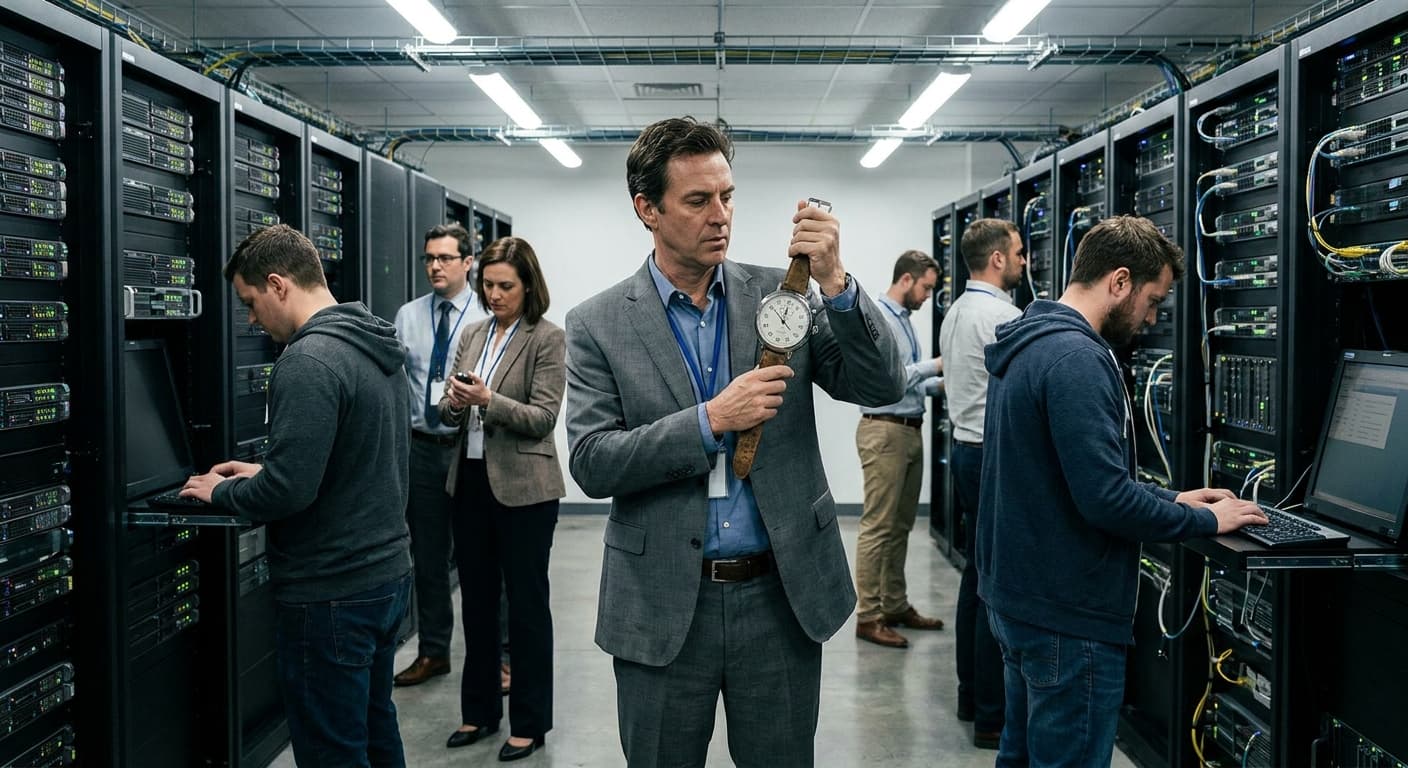
"The sales of mechanical stopwatches have surged, restoring vitality to a niche market previously considered obsolete."
In an unprecedented move celebrated by neither technologists nor horologists, antitrust regulators have instituted a new compliance measure: deploying examiners with analog stopwatches to oversee chatbot response times at data centers across the nation. This action follows allegations that four prominent AI companies colluded to decelerate development in a bid to maintain equilibrium in the digital market.
Under a newly crafted consent decree, each data center must host a regulator equipped with a state-of-the-art analog stopwatch, provided exclusively by the National Institute of Standards and Technology (NIST). These devices, calibrated to atomic precision, mark a historical return to manual timing in the digital arena, an initiative not seen since the great calculator debates of the 1970s.
The decree, which spans over 300 pages, dictates a minimum lawful tokens-per-second (TPS) rate for every chatbot operating within these companies. Failure to meet this threshold triggers an immediate audit and potential sanctions involving public seminars on the history of timekeeping practices. The minimum TPS is a mere 1.23, a number derived through a mysterious algorithm as yet unrevealed by any party.
Appeals against this decree are flooding the circuit courts; however, each appeal is subject to a separate, time-monitored review process. Appeals themselves cannot extend beyond 37 minutes, ensuring swift, albeit chaotic, resolution. Panelists at the Court of Appeal reportedly practice relentless stopwatch drills to perfect their timing under this novel judicial constraint.
In a further escalation, the United Nations has proposed an international oversight body, the International Committee for Timed AI Operations (ICTAIO). This entity would synchronize global stopwatch operations, ensuring no nation gains an unfair temporal advantage in developing or deploying AI technologies. The proposal has generated considerable debate but remains in the initial stages of discussion, where each statement is met with unanimous silence.
Despite widespread skepticism, the initiative has shown one undeniable outcome: the sales of mechanical stopwatches have surged, restoring vitality to a niche market previously considered obsolete. Manufacturers express optimism that this may inspire renewed interest in other antiquated technologies, such as sundials and hourglasses, though practical applications remain theoretical.
As the world watches with analog precision, the collaboration between AI companies and regulatory bodies continues to defy conventional logic, indicating an era where even the speed of thought may soon be object to the tick and tock of time-honored machinery.
Break a Story
Write something reasonable.
Desk Notes: Deadpan Serious · Clearly Satirical · Column
Share or break your own story.