
AP Releases Comprehensive Guide to Eclipse Photography; Enthusiasts Ready to Defy Science
Astronomers concerned as eclipse draws amateur photographers
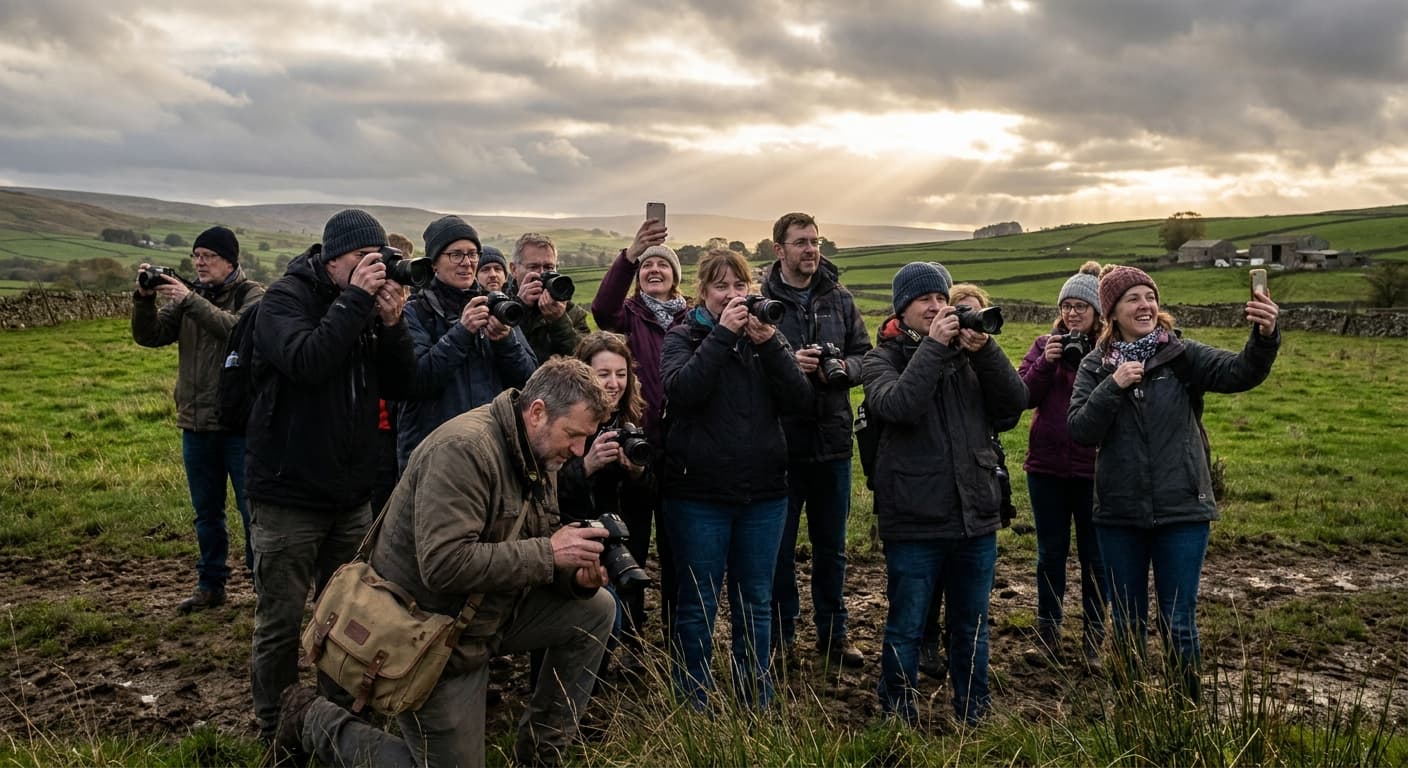
“The eclipse might be dark, but I’ve got Photoshop.” – Hugh de Scope
In a bold step forward for amateur astronomers, the Associated Press has unveiled an intricately detailed guide designed to help the public capture next week’s total solar eclipse over Europe. The release, which includes tips on everything from safely securing lenses to color-correcting the cosmic void, has sparked a frenzy among hopeful photographers eager to photograph this rare celestial event.
Despite the AP's best intentions, professional astronomers remain uneasy. “We love the enthusiasm,” said Dr. Ellory Stargazer, head of the Celestial Imaging Institute. “However, no amount of zoom is going to fill the void of space. It’s called a void for a reason.” Stargazer's concerns echo a growing sentiment within the scientific community that some things are best left to the imagination.
The 68-page guide features several groundbreaking strategies, including ‘Auto-Filling the Black Hole’ and ‘Layering Sun Flares in Post.’ Crowdsourcing from previous eclipse experiences, the AP has also provided tested methods on how to estimate the length of your camera strap needed for balancing on European rolling hills.
One passionate photographer, Hugh de Scope, claims he’s found the perfect technique. “All you need is a good JPEG file and some patience,” said Hugh confidently while adjusting his old digital camera. “The eclipse might be dark, but I’ve got Photoshop. In fact, I’ve already practiced fixing Mars.”
Dr. Stargazer warned that these ambitions could lead to a misplaced wonder. “It’s amazing how much effort is going into capturing what is ultimately the absence of light,” he mused. “It’s like trying to capture the essence of silence with a marching band.”
Meanwhile, local equipment stores across Europe report a noticeable shortage of tripods, indicating the extent to which eclipse fever has caught on. Amateur astronomers are expected to swarm to regions with the clearest skies, eager to prove that nothing—not even light itself—can escape their gaze.
As weather forecasts hint at partly cloudy skies, hopeful photographers remain optimistic. “Clouds can't stop me,” Hugh insisted. “They just add texture. Plus, the guide says so.” Clearly, as the eclipse approaches, the battle between science and shutterbug bravado is about to reach an astronomical height.
Break a Story
Write something reasonable.
Desk Notes: Deadpan Serious · Clearly Satirical · Column
Share or break your own story.