
Archaeologists Uncover Ancient Roman Road Signs; Experts Delighted
Long-lost GPS system challenges historical narratives
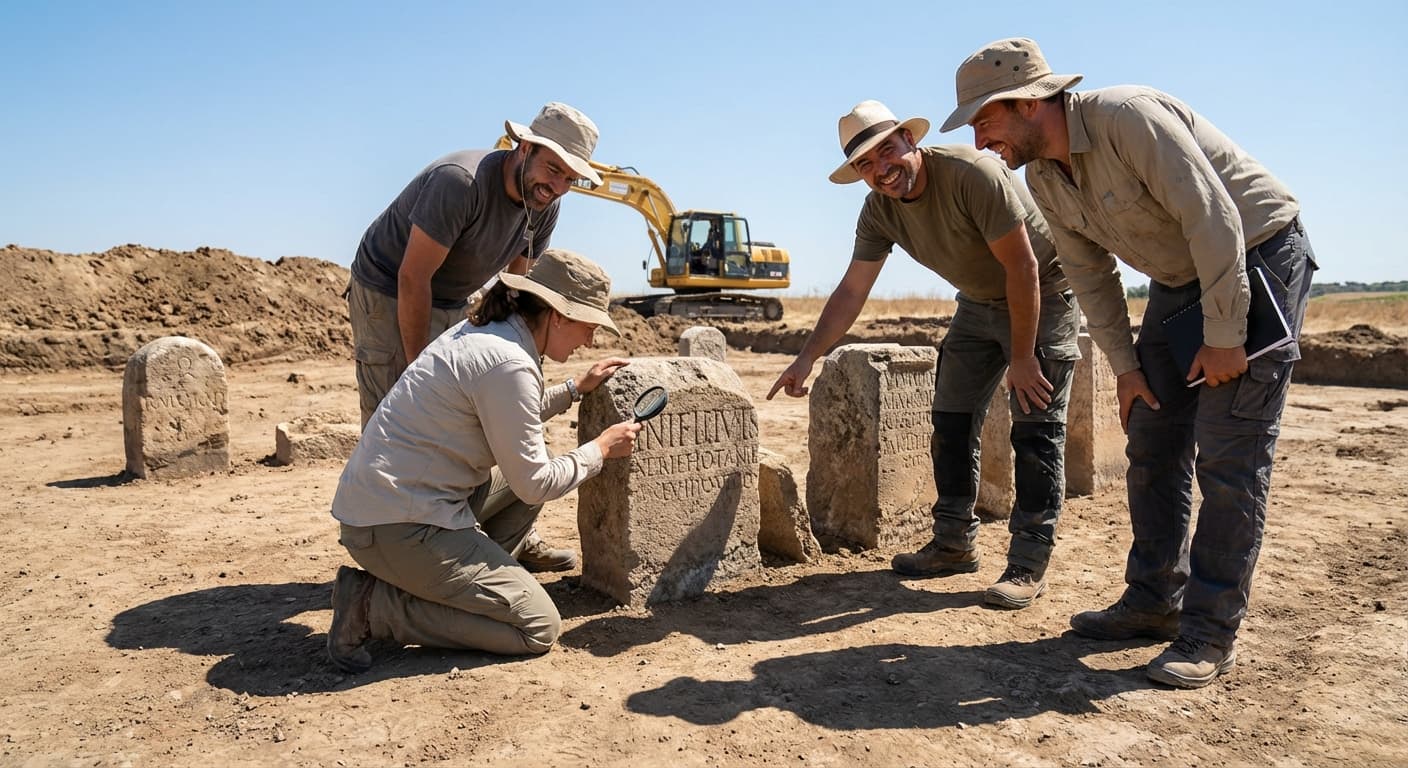
"These signs suggest not merely direction but also displayed real-time chariot traffic data."
ROME—In what experts across the globe are hailing as the most significant archaeological discovery since the unearthing of King Tutankhamun’s iPad, a team of archaeologists has stumbled upon ancient Roman road signs believed to have guided the empire's chariot drivers across its sprawling territories. This find was made yesterday beneath a parking lot in a suburb of Rome, sparking both academic excitement and local traffic jams.
The signs, which are remarkably well preserved, depict complex symbols and seemingly nonsensical instructions that some researchers suspect to be an early form of GPS technology. Dr. Sophia Antica, a leading archaeologist at the International Institute for Hysterical History, explains, "These signs appear to suggest not merely direction but also displayed real-time chariot traffic data. It’s the first known artifact to indicate rush hour in ancient Rome, possibly caused by poorly parked chariots."
Critics, however, are quick to point out that the arrows on these signs curiously resemble instructions for modern coffee chains and gym facilities. "While intriguing," noted Dr. Julianus Pretentius, a rival historian, "it is equally possible these symbols were an ancient advertising campaign. The ancient Romans were known for their marketing prowess, as any defeated Gallic tribe would attest."
In addition to directional arrows, the researchers have also uncovered a series of pothole warnings in Latin, a stunning admission that ancient Roman roads may not have been as flawless as previously advertised. Dr. Antica is calling this revelation "a humbling moment for all those who over-glorified the state of Roman infrastructure."
The broader implications of this discovery remain unclear, with some scholars questioning whether the Romans pioneered not only highways but also traffic jams. "Understanding how they managed their vehicle congestion could be transformative," stated an optimistic city planner from present-day Rome, as he looked longingly at the cluttered streets around him.
While historians and enthusiasts debate the true purpose of these signs, local officials have cordoned off the site, with plans to transform it into Italy's first "Roman Road Safety Museum". Enthusiasts can experience interactive exhibits that challenge modern attempts to understand ancient traffic etiquette. Tickets will be priced, fittingly, at a rate determined by the average time spent in gridlock.
Whether these signposts were a vital piece of civic infrastructure or simply ancient humor reflecting a society obsessed with traffic control and espresso, one thing is certain: history just got more peculiar.
Break a Story
Write something reasonable.
Desk Notes: Deadpan Serious · Clearly Satirical · Column
Share or break your own story.