
Archaeologists Unveil Fashion Crisis Theory Behind Roman Empire's Fall
To Rome, the real barbarians were poor fabric choices
"What use is power without style?" — Glabrio Silvanus, Roman Senator
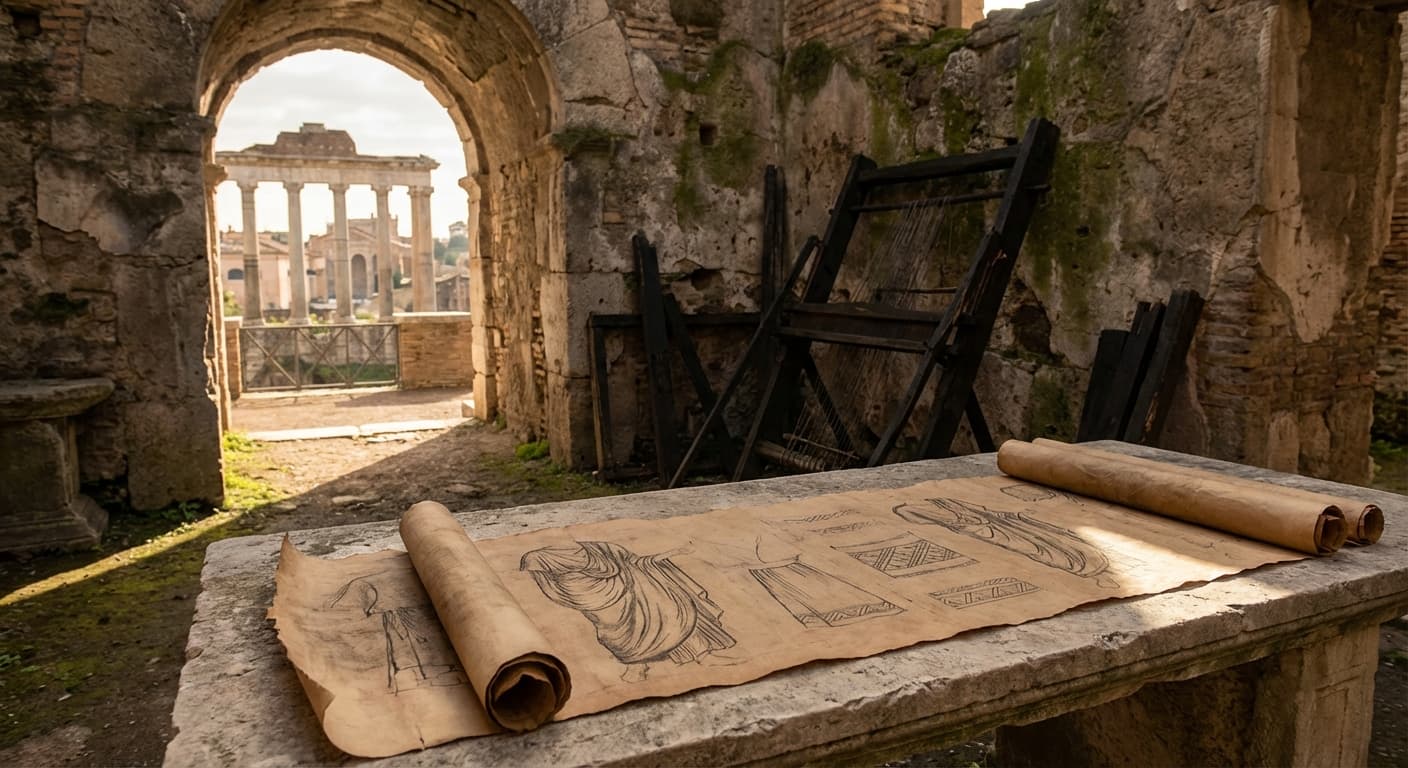
In a revelation that has shocked both historians and fashionistas, newly discovered scrolls suggest that the fall of the Roman Empire was not due to economic hardship, military defeat, or political upheaval. Instead, it was a sweeping shortage of high-quality toga fabric that unraveled Rome's social fabric.
The scrolls, unearthed by a team of incredibly dedicated archaeologists in the ruins of a lesser-known Roman tailor's shop near the Forum, detail an ongoing crisis of scarce luxurious materials. Leading Roman senators, accustomed to the softest Egyptian cottons and the finest silks, reportedly found themselves draped in scratchy alternatives. Glabrio Silvanus, a senator famously known for his exquisite draping technique, lamented in the texts, "What use is power without style?"
The evidence suggests that panic enveloped the political elite. "The Senate couldn't focus on governance," explained Dr. Fabricius Loom, a leading historian in sartorial archaeology. "Debates on military expansion were overshadowed by discussions on pleating methods and toga length adjustments."
As the fabric crisis continued, tensions between social classes reportedly reached new heights. While emperors struggled with their new, unfashionable togas, the common populace began mocking what they called "the emperor's new clothes." This led to an unlikely rise in power for a group of Garmentists: political activists who demanded equitable access to high-quality fabric.
Some Romans turned to the Greek chiton, causing even more unrest. Recent interpretations of the scrolls suggest that advocates for these foreign garments were accused of treason. "Rome was caught in a tug of fabric war," Dr. Loom stated, "where each pleat and fold became a symbol of unrest."
Despite the Empire's vast power, the scrolls portray leaders helpless in the face of the fabric shortage. As surrounding territories witnessed Rome's style decline, barbarian groups reportedly entered with little resistance, encountering rulers too preoccupied with the turquoise dye crisis to mount a strategic defense.
Though some modern historians remain skeptical of these fashion-centric theories, the impact of this discovery on our understanding of Ancient Rome is undeniable. Yet again, history teaches us that sometimes it's not the sword that conquers, but the toga—or lack thereof.
"Maybe if they'd focused less on conquering Gaul and more on fabric supply chains, things could have ended differently," mused Dr. Loom, gesturing to a replica toga that shimmered in the late afternoon sun.
Break a Story
Write something reasonable.
Desk Notes: Deadpan Serious · Clearly Satirical · Column
Share or break your own story.