
College Football Cannon Accident Declares Jersey Remains as Superfund Site
The EPA steps in after dormitory decor leads to environmental disaster
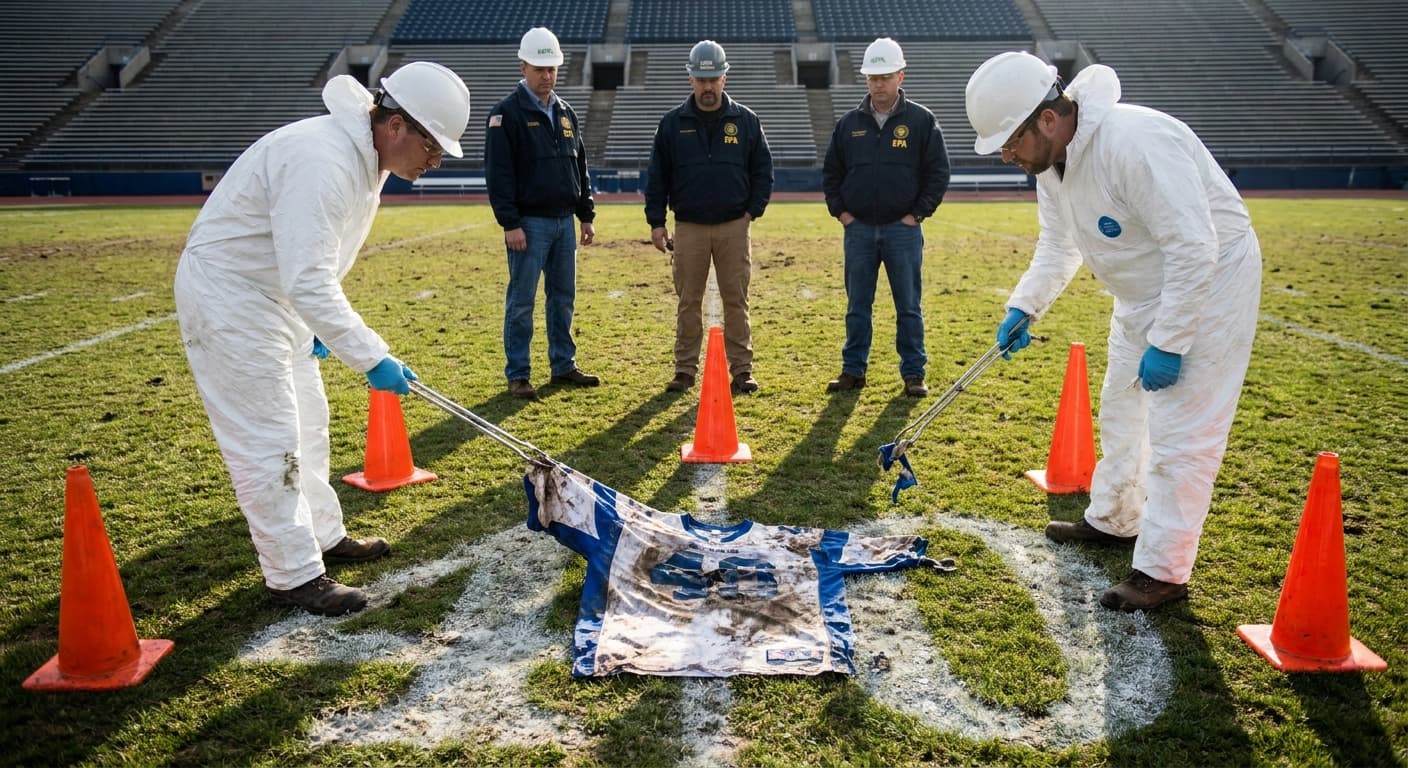
"Elevated levels of synthetic dye and mere traces of tainted perspiration were detected."
In an unprecedented move, the Environmental Protection Agency (EPA) has declared the shredded remains of a college football jersey on a 40-yard line a Superfund site. This follows an incident where the campus cannon of the Southwest Central University (SCU) Spirited Firebrands inadvertently discharged through the jersey of the rival team, the Eastern General Marauders.
The projectile, described as a valorous display of school pride, coincided with the visiting team's warm-up. The jersey, previously seen as mere fabric, has now become a battleground for federal and environmental protocols, becoming perhaps the most intricately shredded textile item to ever require inter-agency intervention.
Sources within the EPA confirmed that the unique airborne diffusion of jersey fibers led to its classification under the Comprehensive Environmental Response, Compensation, and Liability Act. The EPA noted in its formal statement that “elevated levels of synthetic dye and mere traces of tainted perspiration were detected,” necessitating immediate attention.
The Bureau of Alcohol, Tobacco, Firearms and Explosives (ATF) has since intervened, revisiting SCU’s standing permits for use of black powder in campus celebrations. Reports suggest that the cannon, polished to ceremonial brilliance, had unexpectedly achieved an efficiency in impromptu apparel deconstruction not typically seen in higher education settings.
Logistically, the cleanup has now involved the state environmental agency and private textile remediation contractors, renowned for their surgical precision in fiber retrieval. The contractors express confidence in unraveling this peculiar situation, acknowledging the collaboration as a "landmark case in textile-environment interactions."
The NCAA facilities committee also examines this outcome as they assess future rules on cannon proximity to game equipment. A spokesperson indicated that while cannons had earned traditional clout, adjustments might be necessary to prevent further jersey-destruction phenomena.
With layers of federal, state, and collegiate bodies turning their gaze to this 40-yard line, future football games may witness increased rigor in artillery management. The balsamic fragrance of black powder tradition will hereafter carry the weight of an unprecedented textile vigilance.
Break a Story
Write something reasonable.
Desk Notes: Deadpan Serious · Clearly Satirical · Column
Share or break your own story.