
Freight Carriers Embrace Oxen Power Amid Rising Diesel Costs
Oxen teams outperform ELD mandates in innovative transportation shift
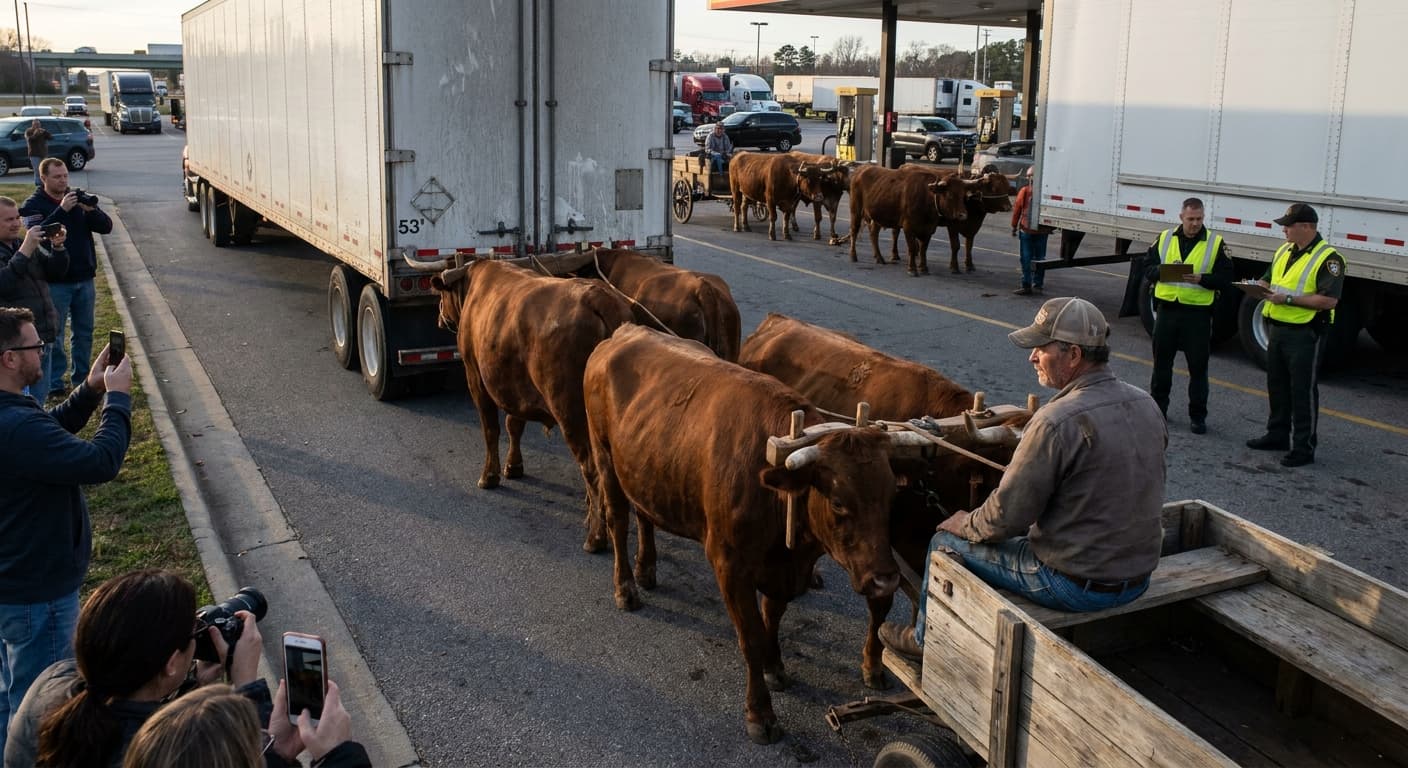
Oxen teams outperform ELD mandates in innovative transportation shift.
In a groundbreaking adjustment to skyrocketing diesel costs, American freight carriers have turned to a solution as old as transportation itself. Across the country, transport companies are employing teams of oxen to tow 53-foot trailers on long-haul routes, creating a scene reminiscent of the Oregon Trail. This decision, though unconventional, is being embraced as a pragmatic measure in response to diesel prices surpassing $6 per gallon.
The Federal Motor Carrier Safety Administration (FMCSA) has been quick to address this shift, noting that while hours-of-service rules still apply, oxen do not have to comply with electronic logging device (ELD) mandates. "Oxen teams provide a rhythmic and inherently low-stress journey," an FMCSA representative implied, "rendering ELDs and complex monitoring unnecessary." As teams of oxen plod steadily across the highways, carriers have reported increased satisfaction, both from a financial and logistical standpoint.
Concerns about weight limitations at Department of Transportation (DOT) weigh stations have been swiftly addressed. DOT guidelines now include specific allowances for oxen teams, bypassing the axle weight limits that pertain to traditional tractor-trailer combinations. According to the most recent tariff codes, oxen are classified under ‘alternative power sources,’ which has drawn interest from both economists and historians.
Freight insurance providers are scrambling to adapt to this new model. While initial reactions ranged from incredulous to amused, insurers are now introducing dedicated policies for oxen-powered freight. Coverage includes liability for potential oxen rest stops and diners refusing service to hoofed patrons. As this mode of transport gains momentum, so too does the expectation of eventual federal oversight.
The United States Department of Agriculture (USDA) has entered the fray with regulatory suggestions, primarily concerning the welfare of these newly indispensable beasts of burden. While typically their purview involves cattle as a food source, USDA officials have had to update their guidelines to cover issues such as pasture rotation and barn-to-trailer ratios.
Efforts to standardize the use of oxen teams in freight transport have now reached the federal stage, with bipartisan energy committees keen to explore the environmental benefits. As oxen leave behind only greenery and footprints, lobbyists are advocating for tax incentives.
The transition has revived pastoral scenes on American roadways, merging the future of tech-regulated transport with an agricultural past, symbolizing a novel approach to modern problems in logistics. Questions remain, however, about how sustainable this solution is, once diesel inevitably stabilizes.
America waits to see if this back-to-basics approach will hold up against the inevitable challenges of interstate commerce in the 21st century, and whether oxen, our newly minted logistic saviors, can continue to bear this burden.
Break a Story
Write something reasonable.
Desk Notes: Deadpan Serious · Clearly Satirical · Column
Share or break your own story.