
Historians Stunned: Roman Empire Rebranded as Olive Oil Boutiques
Empire traded legions for luxurious flavors, researchers reveal
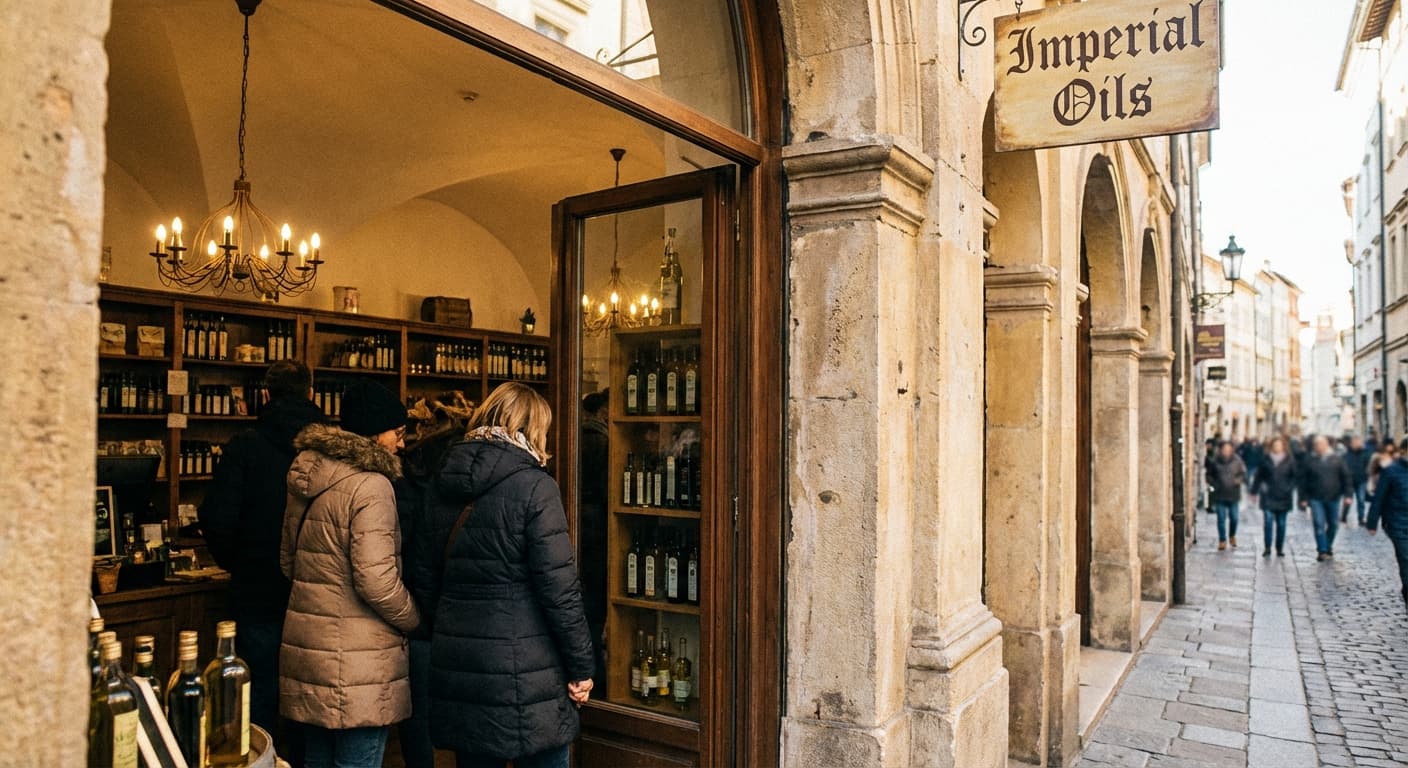
'The humble olive achieved what barbarian hordes never could,' noted anthropologist Livia Oiltus.
In a discovery that has redefined the boundaries of historical scholarship, a group of historians recently uncovered evidence that the Roman Empire's alleged fall was, in fact, a strategic rebranding effort. Instead of collapsing under the weight of political turmoil, the empire ingeniously pivoted to become a network of themed olive oil boutiques that continue to operate today.
A research team from the University of Herculaneum led the investigation, painstakingly analyzing ancient scrolls, graffiti, and Yelp reviews. These revelations indicate that the elaborate architecture and public baths were merely a front for operations perfected in the art of infused olive oils—an empire of taste rather than conquering might.
Professor Gladius Caesarson, leading the study, explained, "We always assumed the marble pillars symbolized political authority. In reality, they marked the grand entrances to artisanal oil shops that tantalized the taste buds of weary travelers."
The academic community is grappling with this paradigm shift. Many textbooks are now in the process of being revised, with some scholars arguing for an expanded narrative that includes the contributions of Emperor Extra Virgin and his successor, Oliveus the Spiced. These rulers orchestrated a departure from militaristic expansion, embracing holistic culinary delights instead.
Economic historians suggest that by transitioning to high-quality olive oil production, the Roman Empire cleverly sidestepped economic downturns. Records show a robust trade network across the Mediterranean, with legions becoming skilled artisans in craft oil manufacturing.
This discovery not only challenges longstanding perceptions of Roman collapse but also sheds light on why contemporary Italian boutiques maintain capitals and columns reminiscent of ancient Roman architecture. As anthropologist Livia Oiltus commented, "It is fascinating to consider that the humble olive could have achieved what barbarian hordes never could—transforming an entire civilization."
While this development has left some traditionalists scratching their heads, others see it as a remarkable instance of adaptive change. The fall of Rome, it appears, was not a fall at all but rather a glorious slipperiness into the sphere of gourmet oils, proving that all roads do indeed lead to flavor.
Break a Story
Write something reasonable.
Desk Notes: Deadpan Serious · Clearly Satirical · Column
Share or break your own story.