
Mexico Revives 3,400-Year-Old Mayan Game for 2026 World Cup, Surprises FIFA with Ritualistic Twist
FIFA hurriedly revises rulebook to include 'no sacrifice' clause
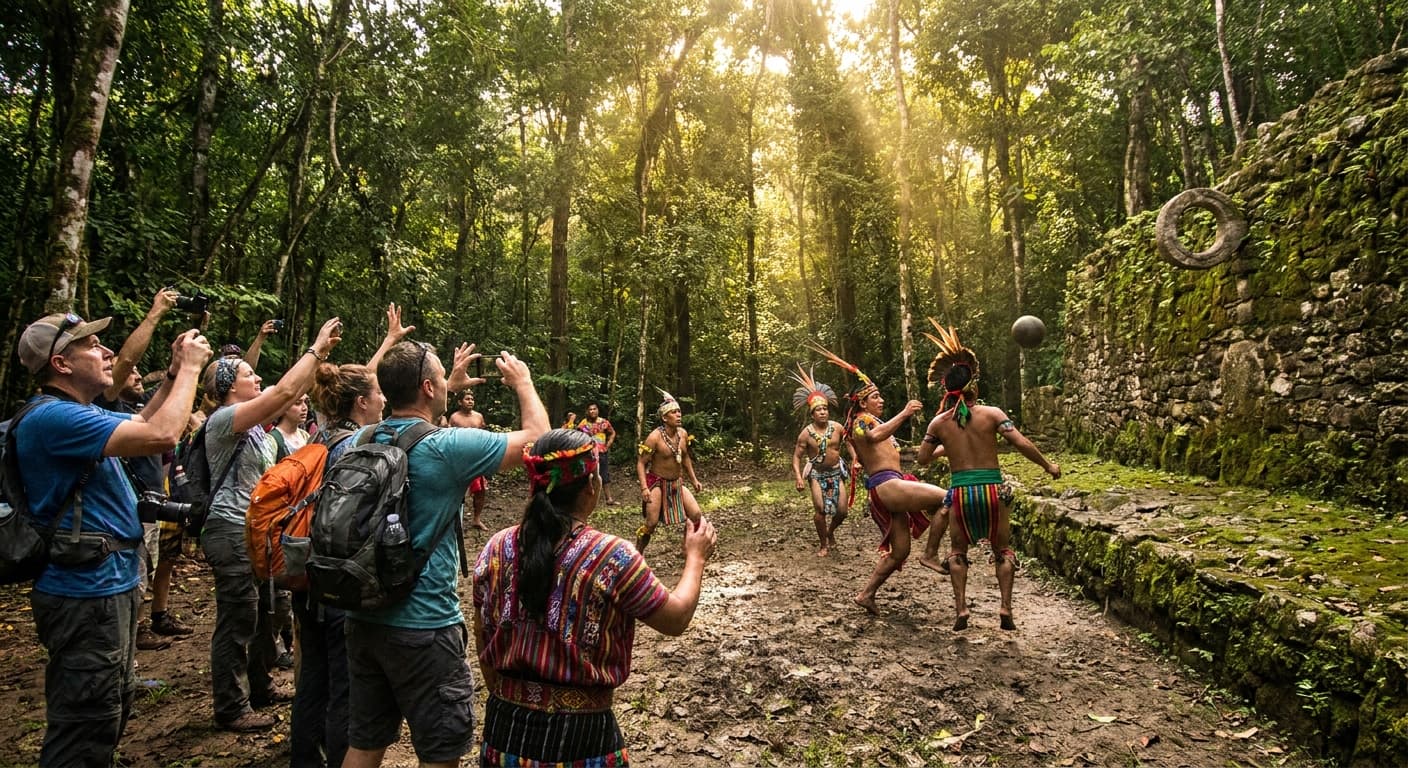
"Rest assured, any sacrificial practices will be strictly ceremonial," assured Mexican delegate Jorge Calderón.
In a surprising twist worthy of the history books, Mexico has announced the revival of the ancient Mayan ballgame, ulama, as an official event for the 2026 FIFA World Cup. However, historical enlightenment has sent FIFA officials into a frenzy upon discovering that the original game concluded with the sacrificing of the losing team. The organization swiftly moved to revise its rulebook, adding a “no sacrifice” clause to prevent any unintended consequences.
With meticulous planning, Mexican officials have partnered with historians to reintroduce ulama — a game dating back some 3,400 years, where players use their hips to propel a heavy rubber ball through stone hoops. Mexican delegate Jorge Calderón stated, “Reviving ulama honors our heritage and allows us to share a rich piece of history with the world. Rest assured, any sacrificial practices will be strictly ceremonial.”
FIFA executives reportedly did a double take as they studied the meticulously preserved murals and artifacts depicting the conclusion of Mayan matches. “We were initially thrilled about integrating such a culturally significant game,” confessed a swamped FIFA representative, “but the sacrificial element has us backtracking some planned halftime shows.”
Historians, however, are reveling in the attention. Dr. Maria Lopez, an expert in ancient sports, remarked, “This is a golden opportunity to educate the world on fascinating Mesoamerican culture. Plus, advising FIFA on ceremonial stand-ins for sacrifice is a career high point I didn’t see coming.”
In a preparatory move, FIFA has hired additional cultural consultants to ensure all festivities around the ulama matches are educational yet remain within the safe confines of modern sensibilities. The World Cup organizing committee quipped that the drumming and feathered costumes will stay, sans any sacrificial stand-ins.
Meanwhile, throngs of tourists are flocking to ancient sites to witness practice matches, complete with loincloth-clad participants, rubber helmets, and the occasional historically-accurate but strictly synthetic heart-representing prop.
As FIFA recalibrates its cultural compass, Mexico remains jubilant about sharing this piece of their enigmatic past on the world stage. The upcoming matches promise an educational spectacle, or as an enthusiast phrased it, "an extraordinary blend of sport, history, and just enough harmless anthropology."
Mexico's World Cup hosting committee released a statement assuring the world’s soccer fans, “Come for the soccer, stay for the heritage — and leave with both your heart and head intact.”
Break a Story
Write something reasonable.
Desk Notes: Deadpan Serious · Clearly Satirical · Column
Share or break your own story.