
NASA Launches Study on Astronauts’ Wi-Fi Endurance
CRS-33's Departure Sets Stage for Bold Experiment
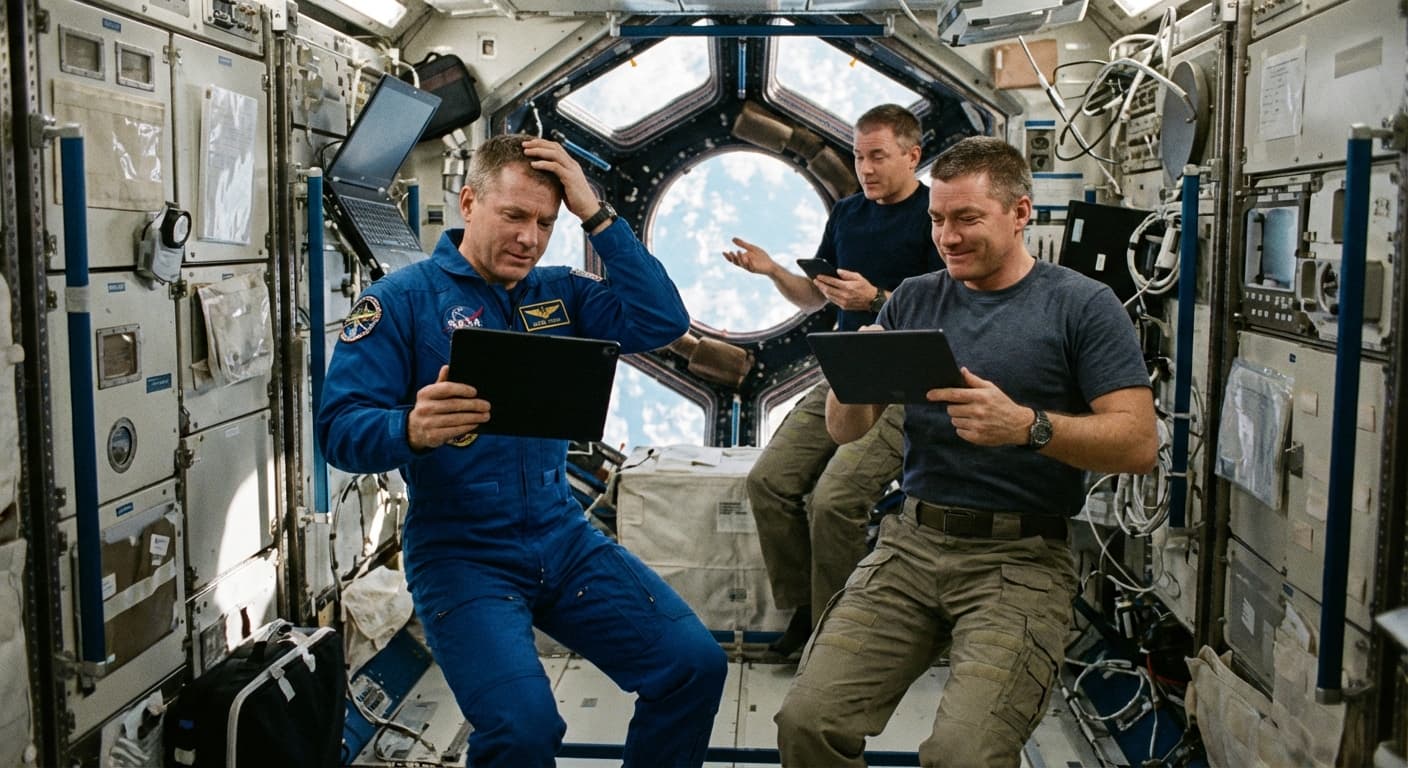
"But the real question remains: How long can they browse without buffering?"
In an unprecedented move, NASA is embarking on a groundbreaking study to explore how long astronauts can survive in space without access to Wi-Fi. Following the successful departure of the SpaceX CRS-33 Dragon spacecraft from the International Space Station, NASA officials have determined that the time is ripe to test humanity's ultimate limits.
"We have seen humans achieve remarkable feats in microgravity, from spacewalks to assembling complex structures," explained Dr. Vera L. Connections, Head of Extraterrestrial Communications Research at NASA. "But the real question remains: How long can they browse without buffering?"
While the astronauts are somewhat concerned about their daily intake of memes and viral videos, NASA assures them that emergency Ethernet cables will be available in case of a Reddit withdrawal. Experts suggest that the study, casually dubbed "Project Wi-Fry," will offer insightful data about connectivity dependency that could aid future Mars missions.
NASA plans to release detailed findings next month, contingent on whether the astronauts manage to survive a full three days without updating their status emojis. Meanwhile, space enthusiasts around the world are invited to follow the experiment via live-streaming services, provided their own Wi-Fi signals remain intact.
Break a Story
Write something reasonable.
Desk Notes: Deadpan Serious · Clearly Satirical · Column
Share or break your own story.