
NASA’s $4.3 Billion Roman Telescope Discovers Universally Confounded Galaxies on Healthcare
Astronomical breakthrough suggests galactic-scale consensus in befuddlement over healthcare systems
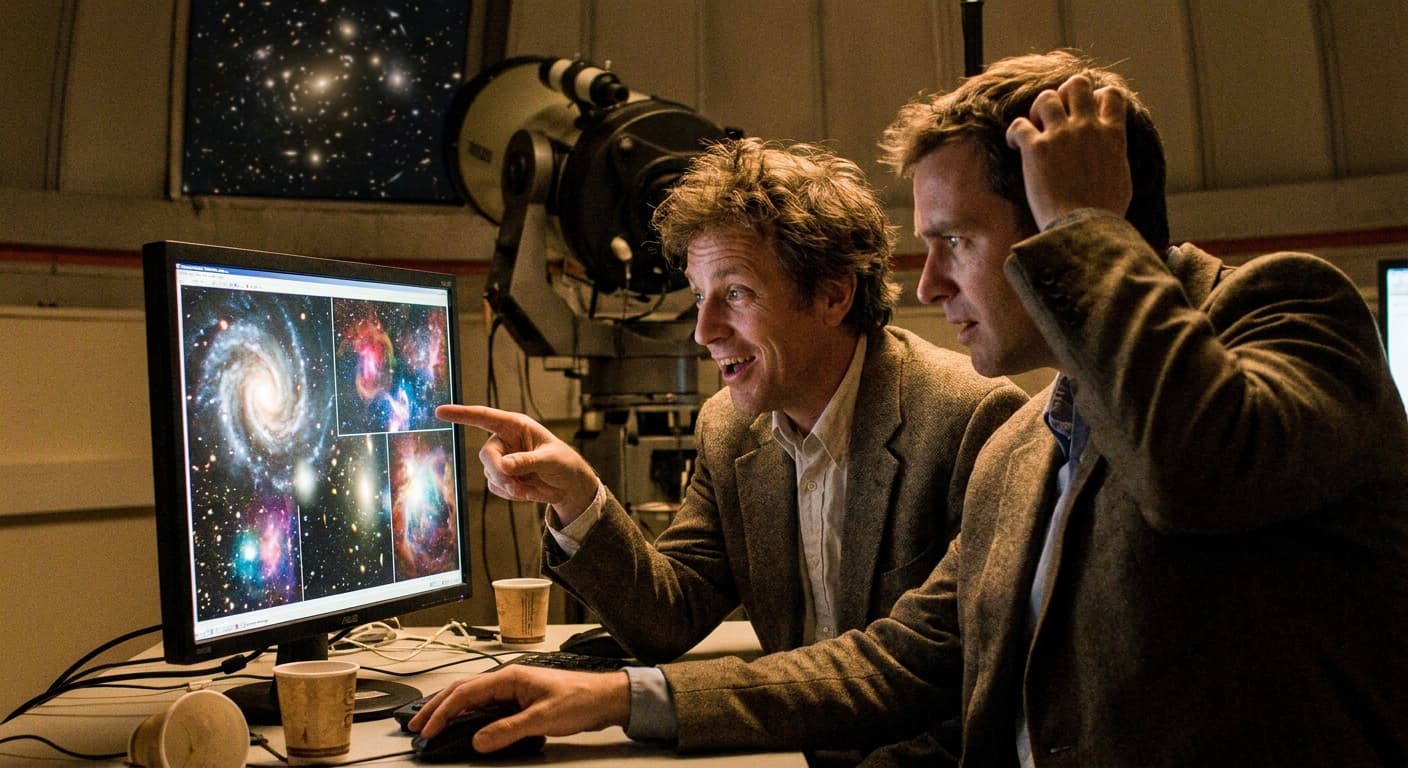
We've spent decades trying to answer the age-old question of whether we're alone in the universe, and today, we finally have it: in our confusion, we are not.
In a groundbreaking celestial feat, NASA has successfully launched the Roman Space Telescope, worth an approximate $4.3 billion. Within mere hours of its monumental journey, the telescope returned data uncovering 400 billion galaxies, none of which, it seems, have managed to establish a functioning healthcare system either.
The Roman Telescope was meticulously designed to operate a million miles away from Earth, a distance carefully calculated by Mission Control to avoid further contemplation of our own planetary woes. "We've pretty much seen enough of this one," stated Dr. Celeste Novachord, the project's chief scientist. "It’s comforting to know we’re not alone—not in understanding the universe, but in our universal lack of healthcare solutions."
In a press conference, NASA's newly appointed Chief of Interplanetary Irony, Dr. Galaxina Humphrey, remarked, "It’s uncanny how the universe aligns with us on this baffling issue. We’ve spent decades trying to answer the age-old question of whether we're alone in the universe, and today, we finally have it: in our confusion, we are not."
Dr. Humphrey further elaborated that the telescope's advanced instrumentation focused specifically on identifying galaxy clusters and their socio-political structures. Each galaxy returned similar frustrating results, appearing to thumb through their metaphorical intergalactic manuals with no more clarity than us Earthlings. "Thankfully," added Dr. Humphrey, "we have science to demonstrate just how inexplicably consistent the cosmos can be in maintaining chaos."
Interestingly, the Roman Telescope also observed what appeared to be long lines outside a pharmacy in the Great Whirlpool Galaxy, but NASA experts dismissed these as probable cosmic dust particles. "We initially thought we captured an image of an advanced healthcare system in action," Humphrey said. "Alas, just more stardust."
NASA plans to continue its exploration, adjusting the telescope to scan other crucial cosmic questions such as, "Is there truly dark matter?" and "Does intelligent life grapple with traffic congestion post 5 PM?" This initiative is slated for 2025, albeit subject to change pending intergalactic revelations.
As the Roman Telescope embarks on what is anticipated to be a decade-long mission, one answer seems to resonate across space: healthcare systems remain as enigmatic and elusive as the universe itself.
Break a Story
Write something reasonable.
Desk Notes: Deadpan Serious · Clearly Satirical · Column
Share or break your own story.