
New Study Finds 'Hallmarks of Genocide' Just Misunderstood Modern Art
UN Nations Confused by Unconventional Installations
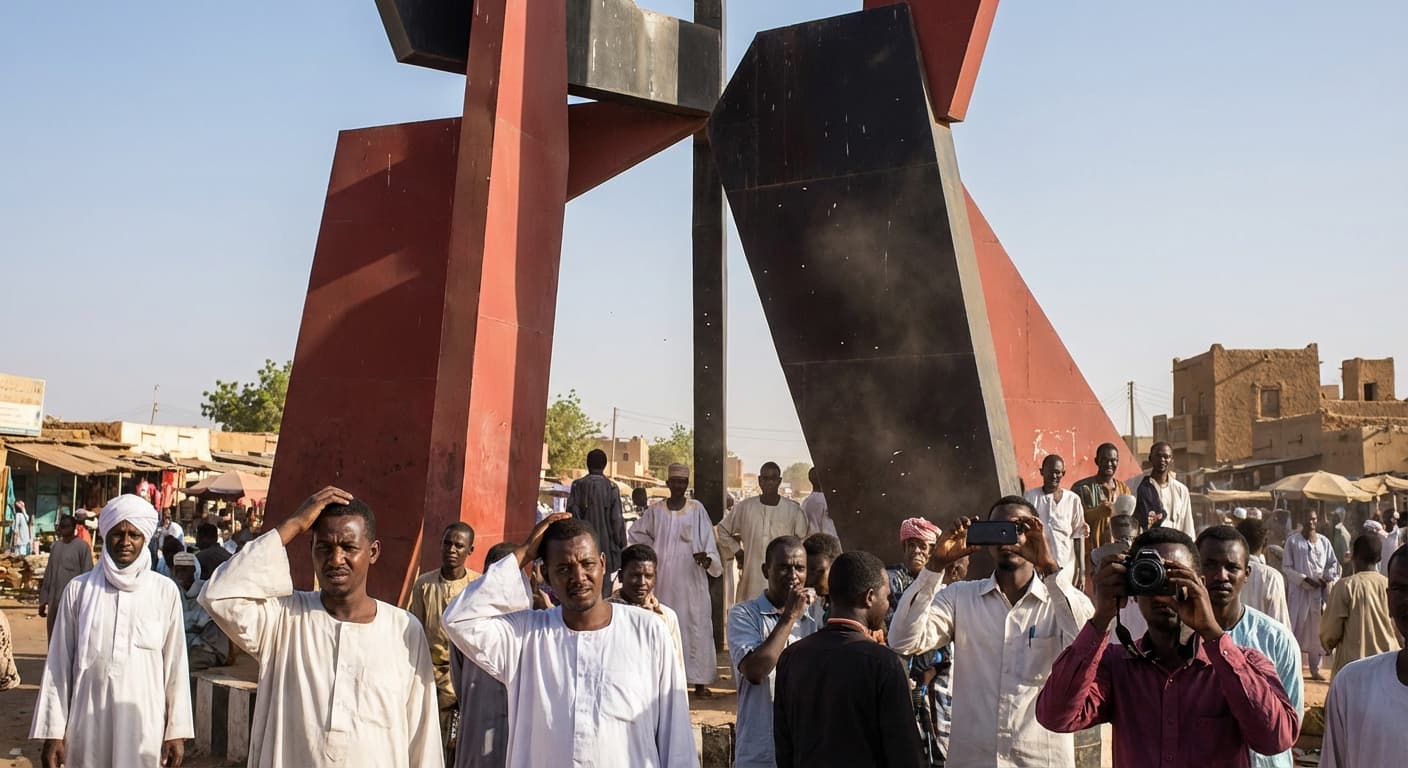
'The blood-red paint was unsettlingly verisimilar,' admitted one diplomat.
In a surprising turn of events, a new study has suggested that what many key UN nations initially labeled as 'hallmarks of genocide' in al-Fashir are in fact avant-garde art installations gone awry. The confusion arose when experts, equipped with maps and magnifying glasses, misinterpreted what was intended as a bold artistic statement.
The installations, broadly referred to as 'Conflict Fantasia,' were supposedly orchestrated by an elusive collective known as 'RSF,' purportedly standing for 'Radical Scene Foundries.' Their aim, according to self-proclaimed art critics, was to provoke deep introspection through jarring, immersive vistas that alas, might have used a touch too much theatrical realism.
"It's a commentary on the cyclical nature of violence," commented one red-faced diplomat after realizing the misidentification. "Though, admittedly, the blood-red paint was unsettlingly verisimilar."
As the art community continues to defend its misunderstood magnum opus, UN nations have vowed to adopt a more nuanced approach in discerning between actual humanitarian crises and vivid performance art, perhaps by incorporating more seasoned art historians into their advisory panels.
Break a Story
Write something reasonable.
Desk Notes: Deadpan Serious · Clearly Satirical · Column
Share or break your own story.