
Office Workers Now Considered Desk-Bound Artifacts, Archaeologists Start Cubicle Excavations
Permanent Employment Leads to Spectacular Archaeological Discoveries
"By 2050, we anticipate deskbound citizens will form symbiotic relationships with their computers," quipped a BLS spokesperson.
In a development that has baffled economists and delighted historians, employees have stopped leaving their jobs, prompting the Bureau of Labor Statistics to classify desk jobs as permanent artifacts. This newfound permanence has captivated facilities managers, who are now recalibrating break room snack rotations to last millennia.
Recent surveys revealed an unprecedented drop in job-switching among American workers, with the Occupational Safety and Health Administration (OSHA) mandated to issue guidelines on how workers can safely transition their endurance from the standing desk to the plush executive chair without risking fossilization.
The Smithsonian Institution has expressed interest in cataloging the developing phenomenon as a living exhibit. "The dawn of desk-centric permanency in the workplace offers unparalleled insights into contemporary human behavior," said one enthusiastic curator, noting that office supply manuals could soon replace stone tablets as significant historical documents.
Employers, taking advantage of this newfound stability, are investing heavily in retention bonuses. However, financial analysts have noted that these bonuses are often exchanged for minimalist desk chairs invented by Swedish designers, renowned for their discomfort and back support that silently weeps.
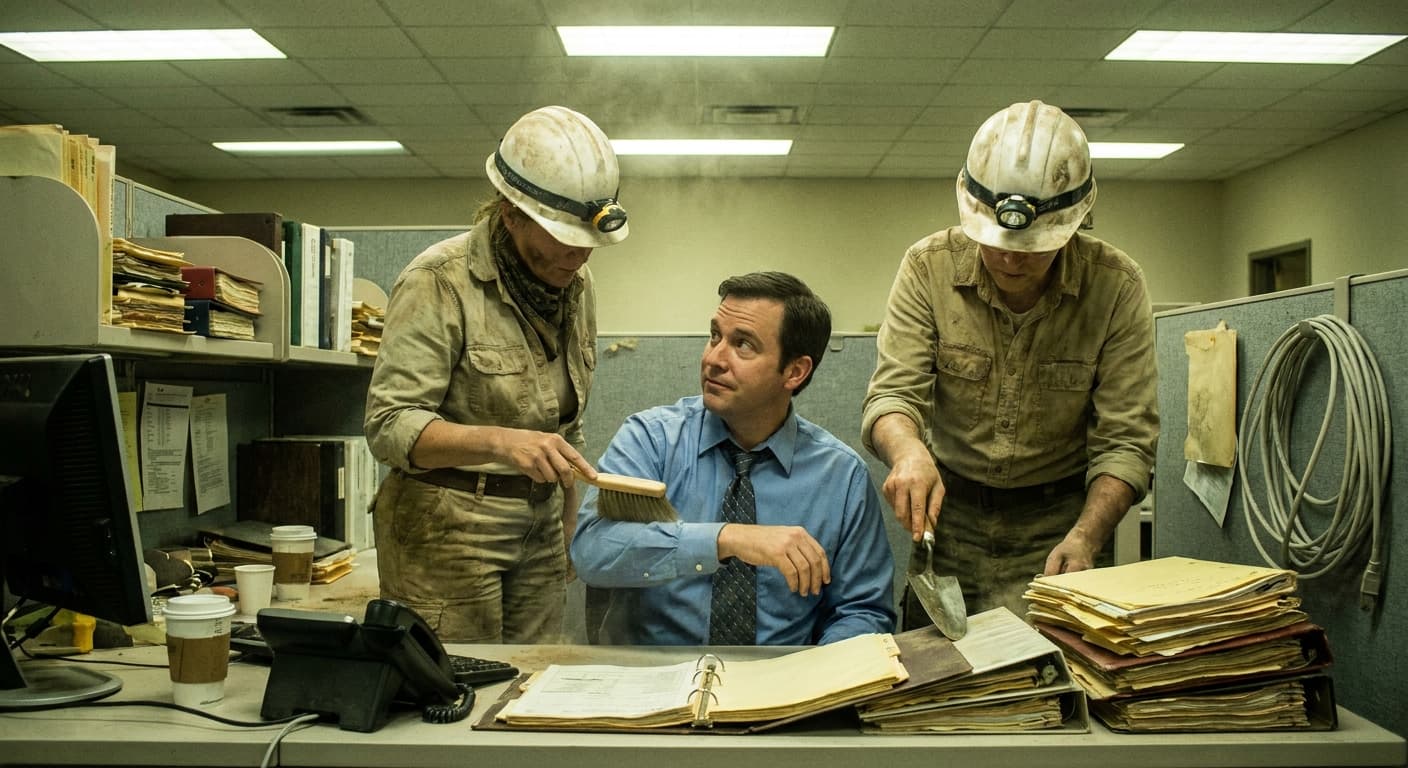
Meanwhile, facilities management teams have begun consulting with geologists to classify cubicles according to sedimentary layers, primarily composed of sticky notes and expired coffee coupons. Discoveries of previously lost low-calorie snack packs and fossilized office plants have sparked interest from research institutions worldwide.
Archaeologists have taken particular interest, conducting trial excavations in select cubicles, revealing treasures reminiscent of ancient Roman ruins — functional red staplers, VHS tapes of outdated training modules, and components of bygone coffee makers.
As this trend holds steady, speculation grows regarding its broader societal impacts. "By the year 2050," a spokesperson for the Bureau of Labor Statistics (sort of) joked, "we anticipate that deskbound citizens will develop symbiotic relationships with desktop computers, marking a new era in human evolutionary history."
The phenomenon that started as a quirk in employment statistics now lays the foundation for a major cultural shift, promising more discoveries beneath the desk clutter and perhaps even a communal arena for the world's first cubicle-desk Olympics.
Break a Story
Write something reasonable.
Desk Notes: Deadpan Serious · Clearly Satirical · Column
Share or break your own story.