
Politician's Hospital Power Source Revealed: Pure Community Loathing
Unexpected Plunge into Sustainable Energy at DC Hospital
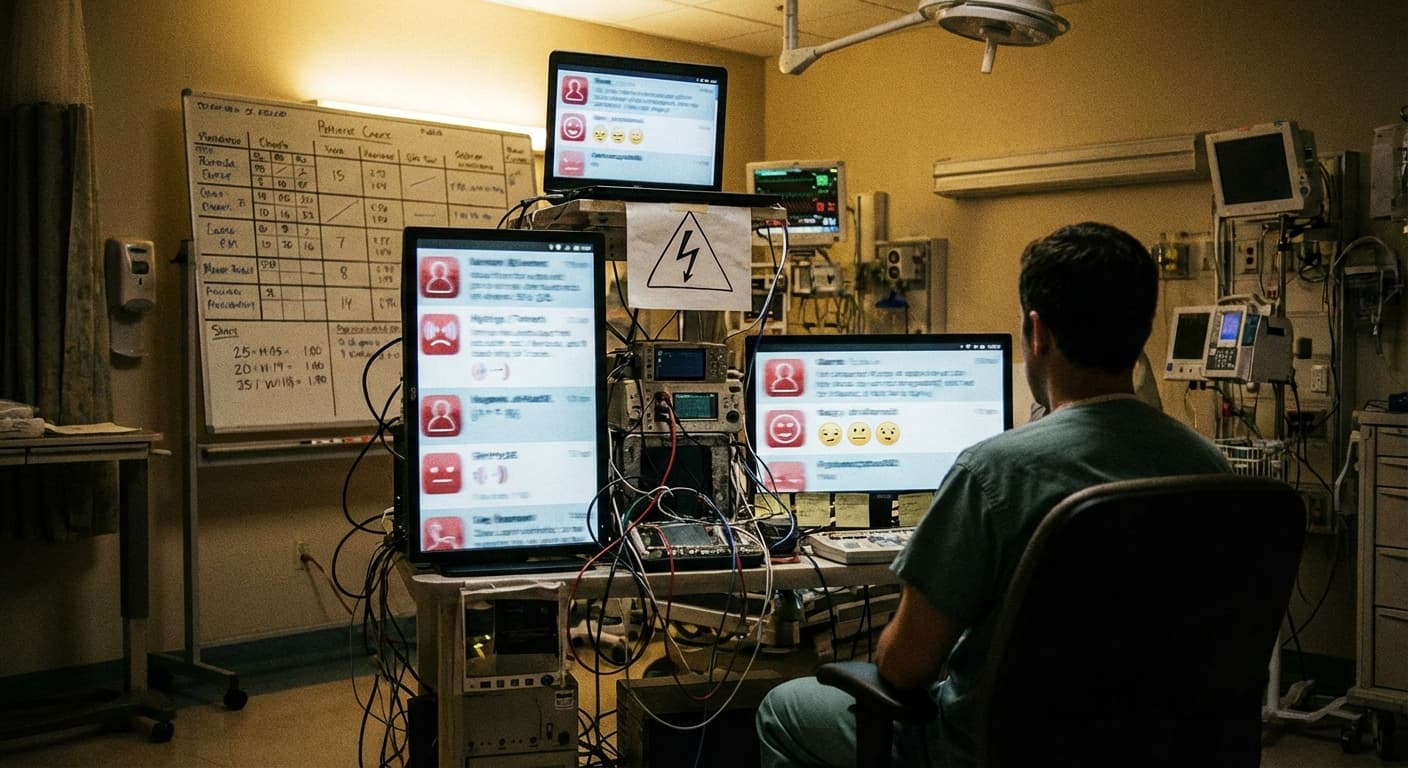
"Not only does it convert anger into life-giving energy, but it also seems to extend the politician's vitality indefinitely."
In an unprecedented development that combines both medical innovation and renewable energy research, a prominent Washington D.C. politician recently admitted to George Washington University Hospital has been found to be harnessing community hatred as an alternative power source. The revelation has sparked discussions across the nation about the potential of sustainable energy.
The politician, known widely for policies that have not exactly garnered universal acclaim, was taken to the hospital under the guise of undergoing a routine medical procedure. However, as rumors surfaced about the nature of the fuels being used to keep the individual thriving against seemingly insurmountable odds, an investigation was launched that confirmed the presence of an unusual energy conversion device.
According to insiders, the device operates by extracting pure negativity from social media platforms, town hall meetings, and local coffee shop chatter. An almost enigmatic transformation process then transforms boiling resentment into kinetic energy, which is fed directly into the hospital's life support systems.
“The efficiency of the system is remarkable,” remarked Dr. Galvin Carruthers, a specialist in unconventional medicine and emerging technologies. “Not only does it convert anger into life-giving energy, but it also seems to extend the politician's vitality indefinitely. It's as if political derision has become the ultimate form of renewable energy.”
While some energy experts are keenly interested in the potential wider applications of such a discovery, suggesting possible future reliance on collective distaste as a clean energy source, others have raised ethical concerns. "Should we really be sustaining our political figures through public vitriol?" asked Dr. Emilia Smothers, an ethicist who studies the moral implications of renewable energy. "While it does reduce our carbon footprint, it could significantly increase psychological emissions."
Nationally, reactions have been mixed. Constituents from multiple states are now questioning whether discontent could improve their local grid, while others fear the social ramifications of incentivizing political hostility as a means of energy production.
A press conference held by the politician celebrated the medical breakthrough, praising the efficiency and affordability of "running on resentment." "At last, something good can come from the genuine feelings of the public," the politician declared, met with a collective eye-roll from the assembled press.
Meanwhile, hospitals in other political hotspots are reportedly considering similar setups, viewing them as solutions to both energy crises and flagging poll numbers. "It's killing two birds with one stone," noted one New York health administrator anonymously.
Despite the divisive nature of this discovery, the political figure has stated an intention to continue on this path of energy independence. “After years of facing the electorate’s disdain, it’s about time it serves a purpose," the politician concluded as reporters scribbled furiously, waiting for the next outlandish revelation.
Break a Story
Write something reasonable.
Desk Notes: Deadpan Serious · Clearly Satirical · Column
Share or break your own story.