
Robots Triumph in Beijing Half-Marathon, Outpace Humans and Household Appliances Alike
Advanced processors edge out human heartbeats in historic race upset
"It’s not just about brawn; it's about bandwidth," said Professor Li Zhou.
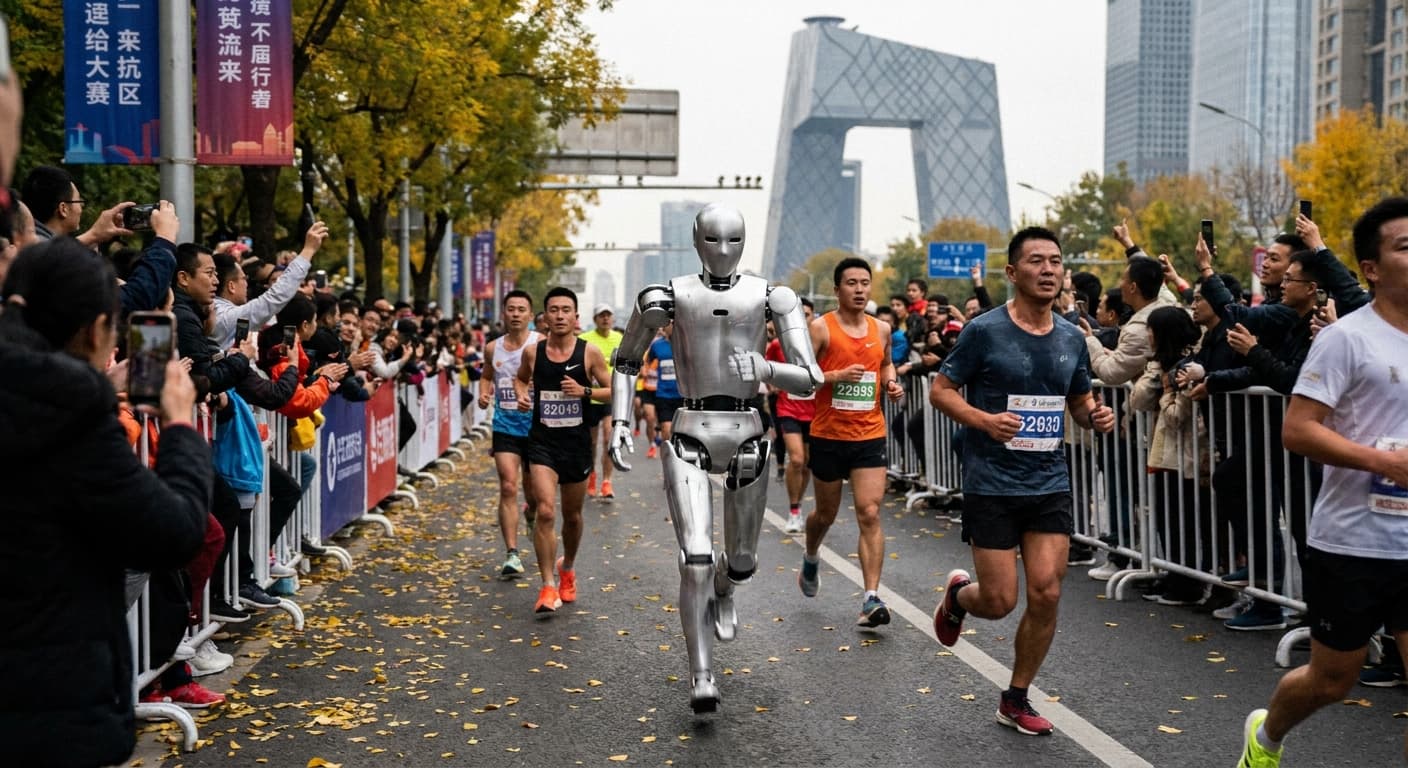
In an unprecedented showcase of artificial athleticism, a contingent of Chinese-made humanoid robots swept the podium at the Beijing Half-Marathon yesterday, leaving human participants trailing in a cloud of metaphorical exhaust and existential dread. The disarmingly charming UNIT-47, whose physique resembles a toaster-oven on legs, captured headlines not merely for shattering Boston qualifying times but for single-handedly redefining the boundaries of what constitutes a runner.
Spectators lined the streets, initially bemused but soon captivated, as UNIT-47 led a well-oiled pack. With pre-programmed strides and algorithmically enhanced endurance, these mechanical contenders clocked speeds unmatched by their fleshy counterparts. Amidst the electronic fanfare, a few intrepid human joggers endeavored, in vain, to maintain pace, earning high-fives from a sympathetic crowd and vows to petition for a new "Pro-Carbon" division.
Remarkably, the bronze-winning UNIT-99 momentarily halted at the 13th kilometer, executing an intricate stationary dance to optimize its WiFi signal for enhanced GPS accuracy. Despite this mid-race intermission, which lasted no longer than a human runner’s breathing break, the robot still clinched its place on the podium.
"It’s not just about brawn; it's about bandwidth," explained Professor Li Zhou of the National Robotics Institute, who designed much of the software underpinning the contestants’ mechanical prowess. "Our aim was not only to test the limits of machine abilities but also to question humanity’s monopoly on athletic achievement."
In response to the metallic triumph, a conglomerate of sweat-soaked humans filed a motion for rematch conditions, proposing that their competitors this time don the quaint accessory of ankle weights. The Humans Running With Humility Society (HRWHS) argues this adjustment merely levels the playing field.
For now, these biomechanical athletic marvels return triumphantly to their charging docks, leaving human runners to ponder their next move and perhaps recharge in their own way with a carbohydrate feast. The world of competitive sports, it seems, will never be quite the same again.
Break a Story
Write something reasonable.
Desk Notes: Deadpan Serious · Clearly Satirical · Column
Share or break your own story.