
Supreme Court Opens Mail Deadline Debate; Time Itself Seeks Clarification
Existential crisis for deadlines as Time files emergency appeal
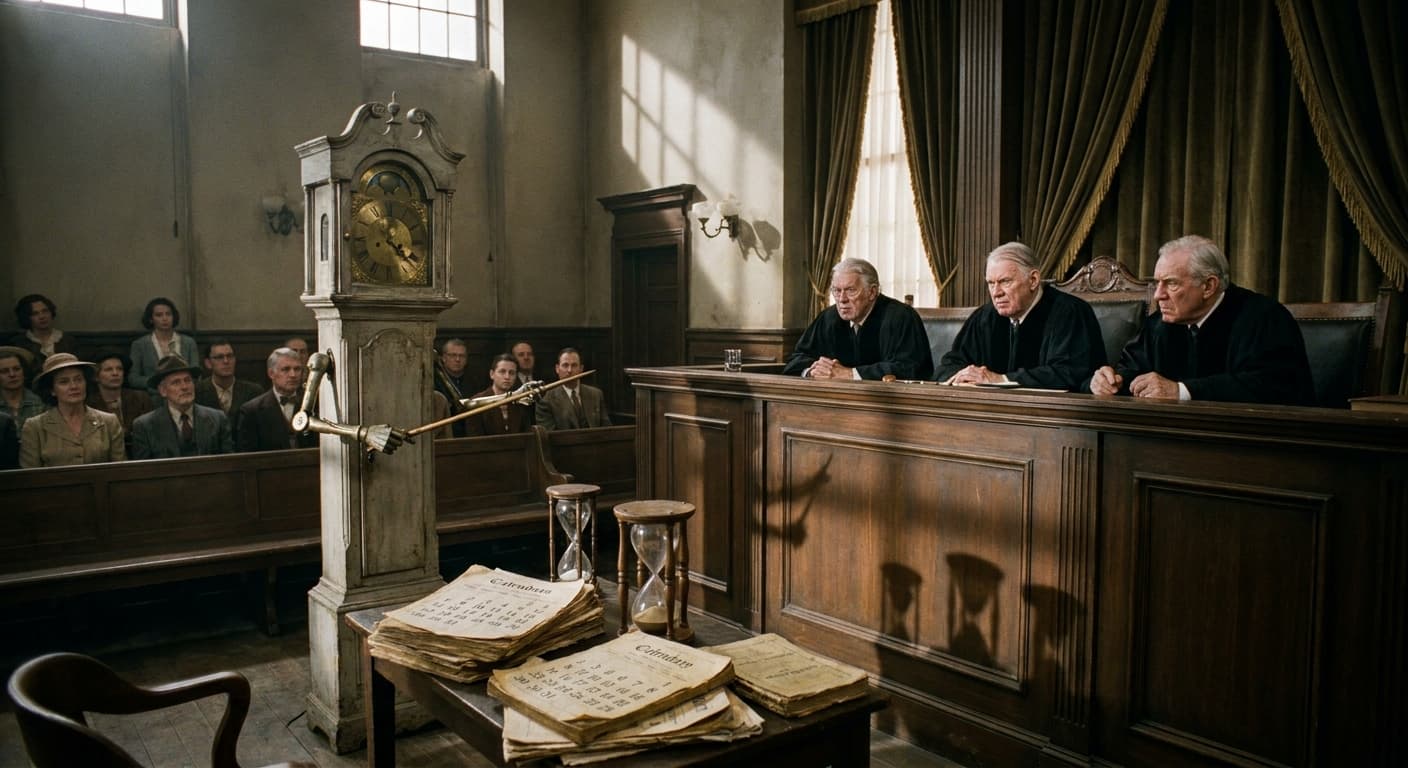
"Now, we must revisit our understanding of punctuality, accountability, and the very fabric of existence." — Time itself
In a groundbreaking decision that has thrown electoral processes into a state of temporal disarray, the Supreme Court has ruled that mail-in ballots can be counted even if they arrive after Election Day. The unprecedented ruling, delivered earlier this week, has prompted Time itself to file an emergency appeal demanding clarity on what constitutes a deadline in the modern world.
Speaking from its headquarters nestled somewhere between 'yesterday' and 'tomorrow,' Time expressed bewilderment. "For millennia, humanity has clung to the idea of deadlines as a cornerstone of civilization,” Time noted somberly in a statement. "Now, we must revisit our understanding of punctuality, accountability, and the very fabric of existence."
Legal analysts, while struggling to see how an abstract concept could file such an appeal, remain intrigued by the potential arguments. "The appeal poses fascinating questions," said one law professor. "If a deadline is flexible, what happens to phrases like ‘just in the nick of time’? Can that beloved adage survive in a post-deadline society?"
Election officials in various states have hurried to align with the ruling’s implications. New systems are being devised to accommodate the fluid notion of when votes can be counted. Some officials have embraced the ruling, proposing new voting periods that span from 'any day in the future' to 'the end of all known time.'
"This might finally solve the problem of low voter turnout," remarked one optimistic election organizer. "If people have forever to vote, no one has an excuse to miss out." Critics, meanwhile, question the paradox of holding an election without an actual Election Day.
Social scientists are also weighing in on the Supreme Court's decision. While some rejoice at the potential for a more relaxed societal pace, others worry about awkward dinner party conversations and the effect on shared calendars if everyone lives by their own clock.
Time's unprecedented legal maneuver is set to be heard in court sometime soon. Or later. Possibly sooner than later, but after a bit. Regardless, it will undoubtedly take time.
Break a Story
Write something reasonable.
Desk Notes: Deadpan Serious · Clearly Satirical · Column
Share or break your own story.