
Tennessee's New Fourth Quarter Singalong Reclassifies Neyland Stadium as Psychological Arsenal
SEC Considers Limiting Access to Atmosphere-Altering Anthems
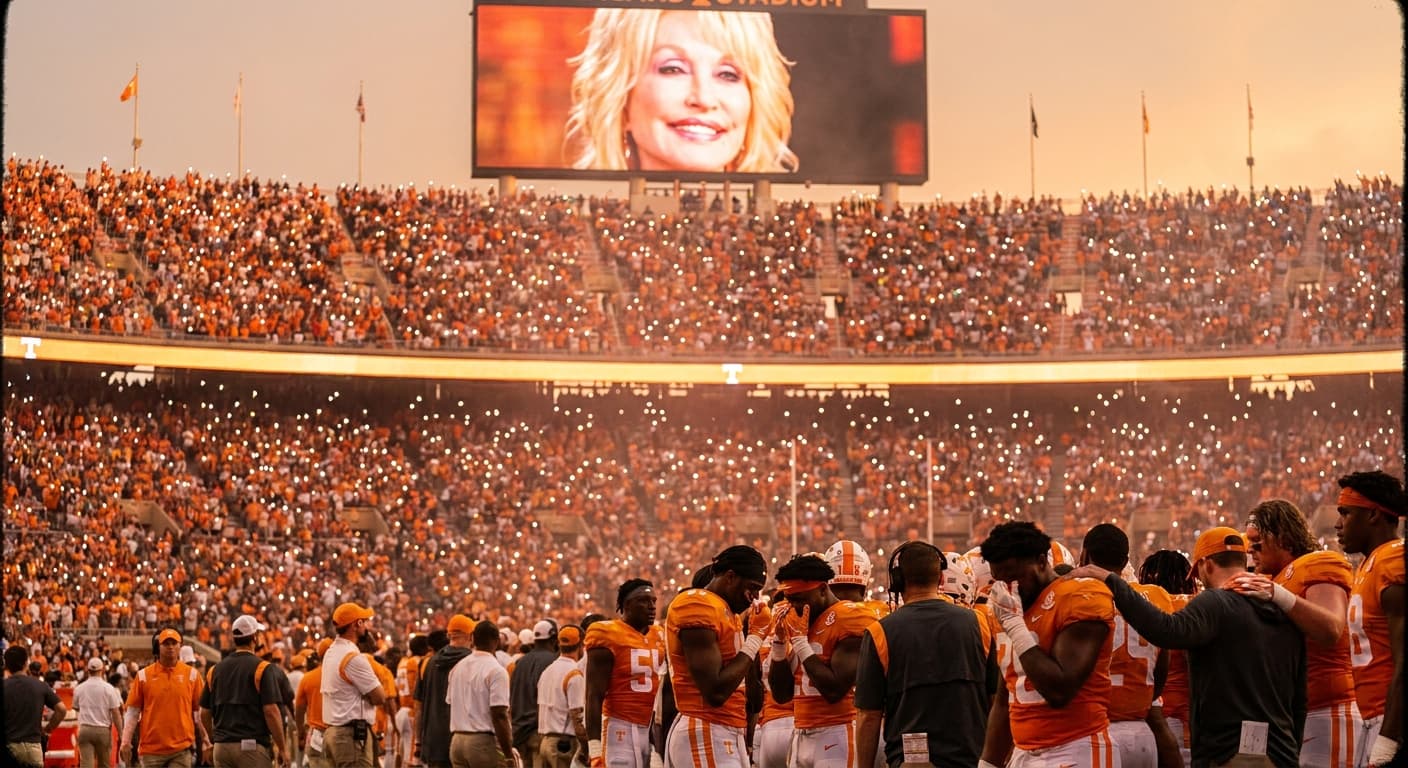
"There's something about Dolly's voice that just makes you want to both call home and win at life."
In an unprecedented move blending Southern charm with football tradition, the University of Tennessee has replaced its usual fourth quarter with a campus-wide Dolly Parton singalong. The decision has sent the Southeastern Conference (SEC) scurrying to reevaluate Neyland Stadium's classification, now dubbing it a psychological weapons facility.
Opposing defenses reportedly come to a near standstill during these harmonious quarters, as players are seen frantically dialing their mothers. "There's something about Dolly's voice that just makes you want to both call home and win at life," said an anonymous coach, who admitted to losing three timeouts due to team tears.
The unusual game element has prompted outcry within the league. Vanderbilt's athletic director issued a formal demand that the singalong be classified as a controlled substance. "We have rules about substances that alter performance," he argued, while noting the peculiar quiet in his own stadium during their workaround strategy of playing absolutely nothing.
"We noticed that the lack of sound caused an eerie awareness that, frankly, unnerved us," remarked a Vanderbilt wide receiver. "I don't know if I prefer the silence to the emotional rollercoaster across the state." Critics claim that the juxtaposition of serenity and Tennessee's outpouring of soulful melody serves as a testament to varying philosophies in football atmospherics.
Amidst the controversy, a linebacker cited his transfer to Tennessee as a step towards emotional support, describing the singalong as "football therapy." He noted, "It's like your soul gets a halftime show, and then you realize you've scored a few more touchdowns."
Meanwhile, a compliance officer from the SEC confirmed with bureaucratic confidence, "Crying, as it stands, is not currently regulated by the league." The lack of regulation has only intensified the debate, causing SEC executives to examine whether the rules should indeed be modernized to encompass emotional impacts caused by lyrical exposure.
As the debate rages on, one thing is certain: Tennessee's innovative approach has not only redefined home-field advantage but sparked a new era in college football. Whether others follow suit remains to be seen, but for now, the echoes of "Jolene" continue to both haunt and heal the gridiron each weekend.
Break a Story
Write something reasonable.
Desk Notes: Deadpan Serious · Clearly Satirical · Column
Share or break your own story.