
US Open Redefines Night Tennis as Industrial Labor Under Labor Law
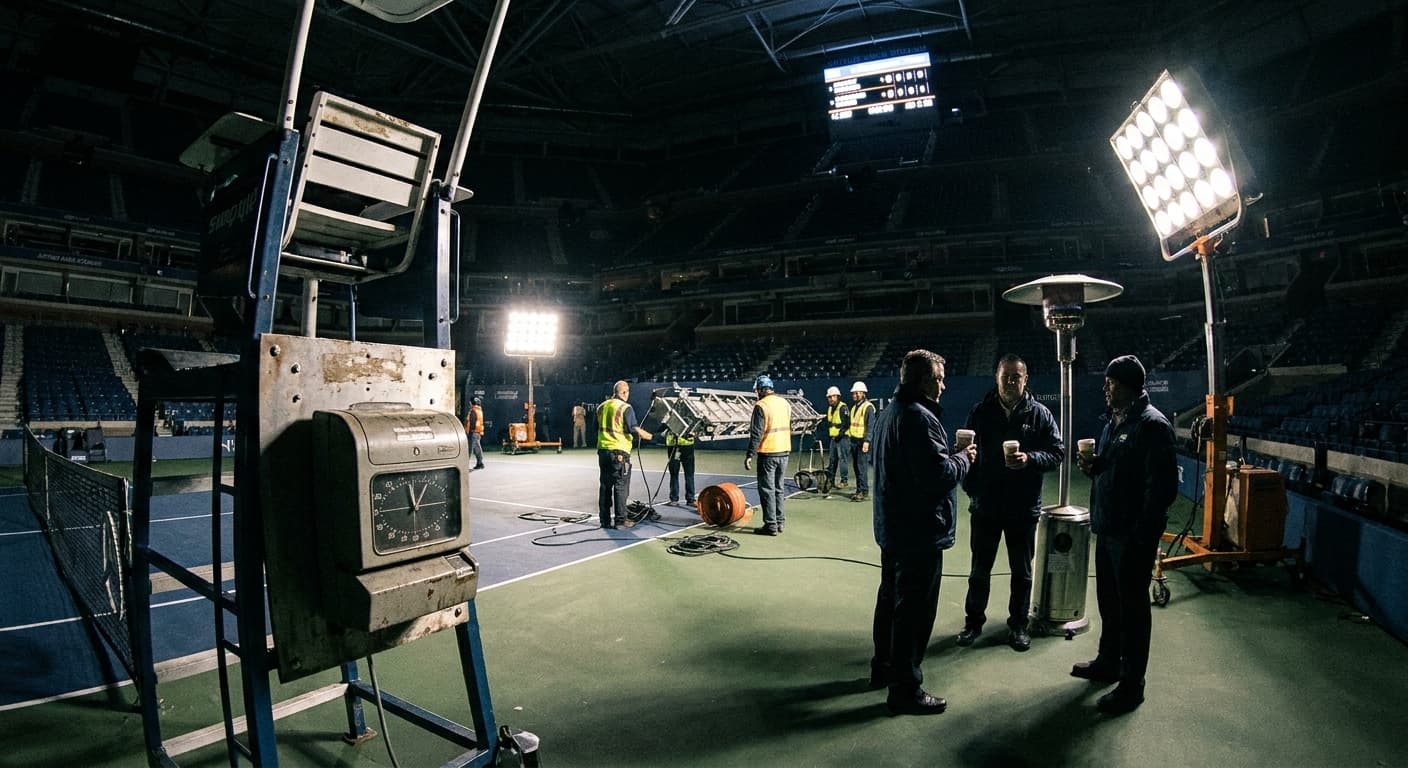
Arthur Ashe Stadium earns status as a night-shift factory
"Ball persons now have a certified bargaining unit to negotiate not only extra hydration breaks but also compensation reflective of their night-time hours."
In an unprecedented decision reached in the early hours of Wednesday morning, Arthur Ashe Stadium was formally reclassified as a third-shift industrial workplace following the latest finish in US Open history. This bold move comes as the tennis matches stretched into the small hours, prompting discussions on labor regulations traditionally reserved for manufacturing and processing plants.
The change was instigated after officials observed that matches consistently exceeded the duration of a typical factory shift. With finishing times ever creeping past midnight, players, ball persons, and officials found themselves enacting what could only be described as a "graveyard shift." Consequently, the United States Department of Labor has stepped in to enforce regulations such as mandatory rest breaks and night-shift differential pay, appropriate for all personnel involved in match proceedings.
"As tennis matches become more grueling, we must ensure the workers are treated fairly," stated a spokesperson for the Labor Department. "Ball persons now have a certified bargaining unit to negotiate not only extra hydration breaks but also compensation reflective of their night-time hours."
The reclassification incorporates elements familiar to industrial workers, including OSHA-mandated rest periods, and a carefully posted graveyard rotation schedule prominently displayed in the tunnel leading to the courts. As ball persons and umpires take part in negotiations, the rest of the tennis world looks on with both amusement and introspection.
Recognizing the ingenuity of this industrial approach, various international governing bodies have begun adopting similar measures for their late-night sporting events. Renowned tournaments across Europe and Asia have expressed keen interest in how the US Open adapts this model, potentially signaling a wider, sports-industry trend towards labor standardization.
While players remained undeterred by these changes, commentators note that the stadium's late-night auditory assault, akin to an active factory floor, pairs well with this novel classification. Long matches may soon necessitate hearing protection or even the use of industrial-grade lighting fixtures to ensure optimum visibility in the wee hours.
This redefinition casts a new light, both literally and metaphorically, on large-scale sporting events. Thus, as Arthur Ashe Stadium embarks on this brave new operational structure, the world will watch with great interest and perhaps even inspiration, as sporting enterprise learns to embrace its inner industry, shift by shift.
Break a Story
Write something reasonable.
Desk Notes: Deadpan Serious · Clearly Satirical · Column
Share or break your own story.